
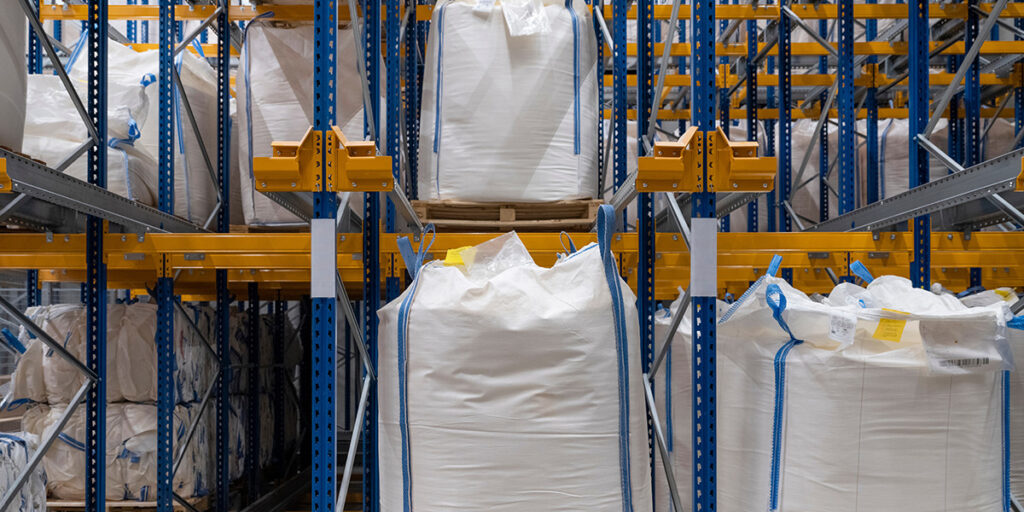
Why is Bulk Bag Safety Important?
Bulk bag safety is crucial for protecting your personnel, product and profits. Handling large quantities of materials in bulk bags carries inherent risks, but you can manage them through a life cycle of safety. A standardized approach to inspecting, filling and moving flexible intermediate bulk containers (FIBCs) helps you keep your operations moving smoothly and safely.
Basic Safety Principles
Before you even start lifting a bulk bag, you need to consider the safe working load (SWL) and the safety factor (SF).
- SWL is the absolute weight limit of a bag. Exceeding this limit risks the bag failing.
- SF is a ratio that determines how many times a bag can be reused. A bag rated 5:1 is designed for a single trip. You load the bag, transport it, discharge the materials and then discard the bag. It’s not safe to reuse. Multi-trip bags are rated at 6:1 and are built for reuse.
If you exceed the SWL, there’s a risk of serious workplace injuries or fatalities. Bags can suddenly rip if you misuse them, making your load a crushing hazard. It’s also important to only reuse bags with the right safety factor.
Some FIBCs have static protection. Type A bags have no static protection, so don’t use them near flammables. Type C is conductive, so it must be grounded. You can use these for hazardous powders. Type D is dissipative, meaning no ground is needed. You would typically use Type D bags for hazardous areas. If you’re handling fine powders like flour, consult with an expert about Type C or D bags to prevent dust explosions from static electricity.
Safe Lifting Guidelines
You can lift bulk bags safely by following these tips.
Dos:
-
Inspect lift loops for fraying or cuts before lifting.
-
Use all lift loops provided (distributes weight evenly).
-
Wear proper PPE such as steel-toe boots and glasses.
-
Check for “hairline” UV cracking on fabric.
Don’ts:
-
Never stand under a suspended bag. This is the danger zone.
-
Don’t use jerky motions — shock loading can snap straps.
-
Don’t drag the bag, or you’ll weaken the bottom fabric.
-
Never gather the loops onto a single hook, unless the bag is specifically designed for it.
Correct Equipment Usage
Using the right equipment for the job helps you prevent spills and handle bulk bags more efficiently. Consider what equipment to use in both the filling and handling stages. The key is to match the equipment to the bag.
Here are some tips on how to use filling equipment correctly:
- Stand-alone filler: Ensure the bag hangs freely so it can fill evenly. Fill the bag square to avoid bursting it. A maximum height-to-width ratio of 2:1 is typical, as per FIBCA handling safety guidelines.
- Pneumatic filler: Inflate the bag before filling starts to avoid uneven clumps and instability. Ensure the filling spout has a vent port, or check if your bag is breathable to prevent bursting.
- Conveyor: Use vibration tables to flatten the material cone in the bag and allow for stable stacking.
When handling and loading bulk bags, use these guidelines:
- Forklifts: The counterweight must be sufficient to match the bag’s loaded weight. Make sure the tines are smooth and spaced correctly to keep loops vertical. Sharp tines can cut loops.
- Cranes and hoists: Check that crane hooks have a spring-loaded safety latch. Use protective sleeves or padding if your crane hook has any squared or rough edges. You can also use spreader bars to ensure the bag loops are vertical when lifting.
Transporting Bulk Bags Safely
Follow these bulk bag transportation safety tips to keep loads secure in transit and ensure safe unloading.
Even when you strap bags down tight, vibration makes the product settle. This movement causes the bag to shrink slightly tight straps can become loose. The load is then free to slide around in the truck. Drivers should check their loads 15 minutes into the drive to re-tighten straps. You can also use a vibration table during the filling process to start the settling process.
Additionally, consider using friction mats to reduce the amount of movement in FIBCs during transit. These mats can also help reduce wear from bags rubbing against your truck’s deck.
It’s best to cover bulk bags during transit to protect them from environmental factors such as wind and UV light. Wind can damage the loops on the bag, while UV exposure can weaken the fabric. By the time your bulk bags arrive, they may be too unsafe to lift.
When using containers to ship your bulk bags, stack them carefully. Use pyramid or supported stacking to prevent the bags from collapsing when you open the doors. Place the heaviest bags on the bottom, with lighter bags on top.
If you encounter toppled bags, never push the stack back up. Dismantle it and restack to ensure the bags are secure.
Unloading and Discharge Procedures
When unloading or discharging bulk bags, remember the golden rule: never stand under a suspended bag.
Take care to control the discharge. Untie the spout from a distance or use an iris valve to help control the flow. These methods are safer than slashing bags open. Keep the spout connected until empty to prevent dust clouds and minimize the risk of explosion.
During unloading, you also need to be mindful of proper storage practices. You should store bulk bags properly to avoid creating a hazard, as per Occupational Safety and Health Administration (OSHA) guidelines. Practices such as stacking, blocking, interlocking and limiting the stack height promote stability and minimize sliding.
For a closer look at choosing the right discharge method for your material, see our full guide to optimizing your discharge process.
Master Safety Checklist
Improve bulk bag handling safety using our quick glance guide:
1. Inspect
Your pre-fill inspection is vital for ensuring your bags and equipment are up to the task.
- Specs: Do the bag’s SWL and SF match the product weight?
- Fabric: Is there any discoloration, UV cracking or moisture damage?
- Loops: Is there any fraying, cuts or abrasion?
- Spout: Is the bottom discharge spout tied off and closed before filling?
2. Fill
Careful filling helps you avoid bursting.
- Shape: Is the bag filled evenly?
- Venting: If using pneumatic filling, is the bag vented to prevent bursting?
- Static: If handling hazardous powder, is the ground cable attached (Type C)?
3. Lift
When lifting bulk bags, check:
- People: Is the drop zone clear?
- Tines and hooks: Are forklift tines smooth and spaced correctly? Is your crane hook smooth, or does it have protective sleeves?
- Loops: Are all the loops on the hook?
- Vertical: Are the loops hanging straight?
4. Transport
Keep loads secure in transit by checking the following:
- Straps: Are tie-downs tightened? Recheck them after driving 15 minutes.
- Protection: Is the load covered to block UV and weather conditions?
- Friction: Are friction mats in place to prevent sliding?
5. Unload
Take care when unloading using these pointers:
- Discharge: Are you using a remote untie string or an iris valve?
- Dust: Is the spout connected until fully empty?
- Storage: Stack bulk bags properly to ensure secure storage.
Trust Bulk Bag Reclamation for FIBCs You Can Depend On
When you follow proper safety procedures for using FIBCs, you protect your personnel, products and profit margins. It’s important to treat every bulk bag with the same safety precautions. Using verified bags that meet high-level industry standards means you’re getting a more reliable product.
At Bulk Bag Reclamation, we have over two decades of experience in reconditioning and selling high-quality FIBC bulk bags. We have a huge inventory of rigorously inspected bags, including baffle bags, spout top, duffle top and open top bulk bags. Explore our inventory online, and request a quote today.