
How Are Bulk Bags Used in Agriculture?
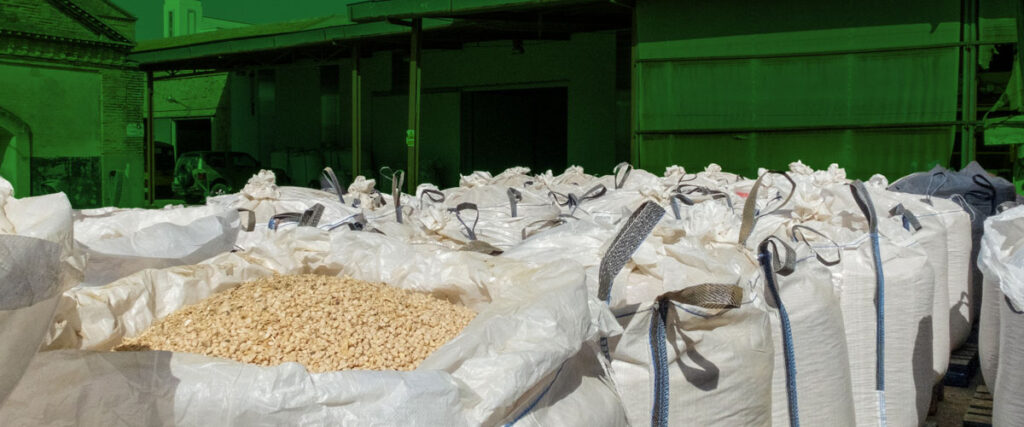
Farmers face constant pressure to move, store and protect their crops efficiently and cost-effectively. Flexible intermediate bulk containers (FIBCs), also known as bulk bags, have become an essential tool for modern agriculture. In this guide, you’ll discover the top uses for reconditioned bulk bags in agriculture, their key benefits and how to choose the most cost-effective, eco-friendly options for your farm.
Key Benefits of Bulk Bags in Agriculture
Reconditioned bulk bags for agriculture can be used to collect, store, ship and sell products and materials. Their main benefits are:
- Reduce the costs of container purchases: Because they are durable and reusable, bulk bags lower the need for frequent container replacements, saving money over time.
- Increase profits by protecting and preserving products: Bulk bags shield crops and materials from damage during storage and transport, reducing losses and maximizing the value of each harvest.
- Prevent contamination, water and travel damage, and other threats: With secure closures and tough, moisture-resistant fabric, reconditioned FIBC bags for transport and storage keep contents safe from pests, weather and handling hazards.
- Reusable, repairable and recyclable: Bulk bags can be used many times and are easily repairable if damaged. Since they are refurbished and reusable, they support sustainable farming practices.
- Available in different shapes and sizes: With a range of dimensions and designs, bulk bags can fit specific crops, storage needs or transport requirements.
- Customizable to individual needs: Farmers can order bulk bags with custom features like liners and discharge spouts to match their unique operational demands.
- Compatible with farm equipment: Thanks to sturdy lift loops and reinforced seams, bulk bags can be easily handled by forklifts, loaders and other common agricultural machinery.
Top Uses for Bulk Bags in Agriculture
FIBCs are on the rise. Valued at $8.36 billion in 2024, their market is expected to reach $12.86 billion by 2033. The largest growing segment is food, with a CAGR of 5.9%. Reasons for this growth are the expansion of the food industry and the increasing need to reduce the total weight of bulk packaging, particularly for grains and rice.
Popular uses for agricultural bulk bags include:
1. Reconditioned FIBC Bags for Crop Transport and Storage
Reclaimed FIBC bulk bags are engineered to withstand the rigorous demands of modern farming. Available in many shapes and sizes, they offer unparalleled flexibility for crop storage, with some types able to carry up to 5,000 pounds per bag. They are commonly made of petroleum-based polypropylene — a flexible, woven and lightweight thermoplastic that’s entirely recyclable.
These durable, sanitary containers do not erode, degrade or undergo chemical reactions. Their watertight construction safeguards the integrity of crops by:
- Preventing pests from puncturing the bags.
- Stopping pathogens from finding their way into crops through punctures or tears.
- Acting as a barrier to moisture — a fertile breeding ground for mold, fungus and bacteria.
FIBCs are the most popular way to ship dry bulk materials by sea. Since they are easy to handle, loading and unloading are quick and convenient. Their lightweight nature allows more product to be transported, and they’re easy to secure to prevent hazardous shifting in transit.
2. Seed Storage
Protecting seeds from moisture and pests is critical for maintaining their viability and ensuring successful germination. Even small amounts of humidity or pest intrusion can spoil large quantities of seed, leading to costly losses.
Cost-effective bulk bags for grain storage or other types of crops provide a secure, sealed environment that helps keep seeds dry and safe from rodents, insects and contaminants. By minimizing exposure to damaging elements, FIBC bulk bags can significantly extend the shelf life of stored seeds and reduce spoilage rates.
For especially sensitive or high-value seeds, farmers should consider using food-grade or ventilated FIBCs. Food-grade bags ensure that seeds remain uncontaminated and safe for planting or feed, while ventilated FIBCs allow for airflow, preventing mold and heat buildup during storage and transport.
3. Fertilizer Storage and Transport
Farmers need to store other materials for extended periods in addition to their product. When storing and transporting fertilizer, bulk containment solutions that will not degrade from chemical reactivity are crucial. FIBC bags provide an inert storage environment, making them ideal for packing and transporting fertilizers. Thanks to convenient handles, bulk bags are easier to load and move.
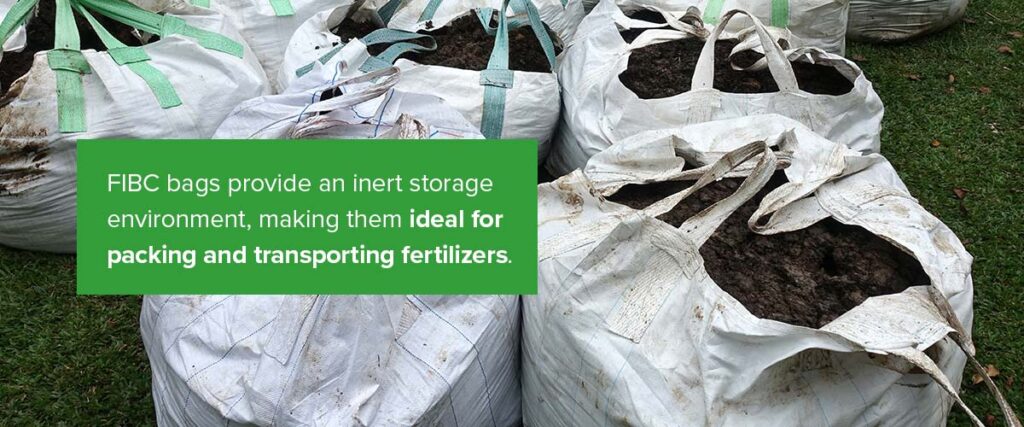
Since fertilizer can become contaminated and contaminate other materials, bulk bags keep the product safe and contained.
4. Bulk Bags and Sustainable Agriculture
Switching to eco-friendly agricultural bulk containers, like reusable and reconditioned FIBCs, can significantly reduce packaging waste on farms. By choosing reconditioned FIBCs, farmers can actively support circular economy practices, keeping materials in use longer and minimizing the need for new resources.
Reconditioned bulk bags for agriculture are durable and long-lasting. They can be recycled at the end of their life cycle, reducing the environmental footprint of agricultural operations.
Why FIBC Bulk Bags Are Essential for Modern Agriculture
FIBC bulk bags are invaluable in agricultural processes. From storage to the transport of crops, seeds and other materials, their agricultural applications are varied. The benefits remain the same across uses, providing farmers with:
- Robust quality: Bag quality is a significant consideration for farmers harvesting, packing and supplying food like grains, fruits and vegetables. Bags undergo careful reclamation practices and certifications that verify they are fit-for-purpose. Farmers can have peace of mind that their containers are safe for food-grade products.
- Easy availability: When farmers need containers quickly, they can rely on FIBC bulk bag suppliers to meet their demand. You can also place orders for specific varieties or customized containers in advance.
- Various types and sizes: FIBC bags are available for specific crops, seeds and fertilizers. They make it easy to provide the specific care each product requires.
Frequently Asked Questions
Agricultural managers looking to understand more about bulk bags typically ask the following questions:
What should I look for in a bulk bag for agricultural products?
When choosing a bulk bag for agricultural products, consider the following:
- Bag material: For agricultural FIBCs, polypropylene is the industry standard. It’s strong, durable and lightweight. Because it’s nontoxic, it can be suitable for certain produce and animal feed.
- Bag style: The right bag style depends on the product the bag will hold and your filling and discharge equipment. You can choose from an open, duffle or spout top. An open top makes manual filling easier, while a duffle top reduces spillage. A spout top has a smaller opening, but can lead to faster, cleaner loading and unloading with the right equipment. Regardless of the top style, baffle bags come with internal panels that keep the bag rectangular, which improves stacking and storage efficiency.
- Ventilation: Ventilated bulk bags allow air flow, which prevents mold and heat buildup during storage and transport. Coated versions improve the bag’s moisture resistance.
- Safe working load (SWL) and safety factor (SF): SWL indicates how much weight you can put in the bag, while SF indicates how much stronger the bag actually is. For instance, a 5:1 SF indicates that the bag can hold five times its rated load before it fails. That said, the ratio is a testing threshold — you shouldn’t be putting more weight than what’s indicated in the SWL.
What you put in the bag influences the right bag type. Various products behave differently during filling, storage and discharge. For instance, you may need to consider the product’s moisture sensitivity. While certain bulk bags are safe for agricultural products, they are not always food-grade certified.
Which bulk bag type is best for dry flowable materials?
Bulk bags or FIBCs are especially made for dry flowable materials, but the best option for agricultural products can be the duffle top bag. They work best for animal feed, dry grains, seeds and fertilizers. Unlike a spout top that requires specific equipment that caters to the cylindrical spout, the duffle top bag’s larger opening enables more filling and emptying options.
Baffled versions have extra fabric panels that keep the bag rectangular. This shape makes them easier to stack, store and ship, even at full load.
Can agricultural bulk bags be reused?
Yes, many agricultural bulk bags can be reused. To know which bags are reusable, check the safety factor:
| 5:1 SF | Single-use bag |
| 6:1 SF | Multi-use bag |
Visually check the bag as well. Watch out for discoloration, UV cracking and moisture damage. Are there cuts or abrasions? Avoid reusing bags with embedded debris, mold, unreadable fabric markings and hazardous material exposure, as these issues can’t be removed through cleaning and reconditioning.
Reconditioned bags must meet ISO 21898, which is the same standard that new bags must meet. The standard specifies material, construction, design, testing and marking requirements. It also offers guidance on how to select and safely use FIBCs.
What are bulk bags used for in agriculture?
In agriculture, you can use bulk bags to transport and store:
- Crops: The bag acts as a moisture barrier against mold, fungus and bacteria.
- Seeds: The bags keep the seeds dry and safe from rodents, insects and contaminants, extending shelf life and reducing spoilage.
- Animal feed: Since animal feed is semi-perishable, bags keep it fresh during storage and transport.
- Fertilizers: Bulk bags come with high chemical resistance, making them suitable for holding fertilizers.
Get Started With Cost-Effective, Reconditioned Bulk Bags
Ready to boost your farm’s efficiency and sustainability? Contact Bulk Bag Reclamation or request a quote for our eco-friendly agricultural bulk containers. Discover how reconditioned FIBCs can save you money and protect your harvest.